How Long Does It Take to Install a Home LifT in Singapore?
Installation of a home lift is one of the most effective ways to make your multi-story house comfortable and easy to live in. But the very first question that comes to mind of the owner of a house is related to the duration of the whole process of installation.
Depending on various factors, such as the kind of home lift you choose, the number of floors in your house, available space, building structure, preparations for the installation, electrical requirements, and other factors, the overall installation period may vary.
A simple installation process can be performed in a shorter time than more complicated processes, which require changes in the structure or some construction work.
Knowing about various stages of the installation process will help you to make better plans and prepare your property for the installation of a home lift.
How Long Does It Take
to Install a Home Lift
in Singapore?
The installation of a home lift is one way of making the multi-storied house more comfortable. However, the first question that comes to mind for the homeowner is that of the installation period.
So, how long does it take to install a home lift in Singapore?
There is not always a specific time that is given to every property because the entire installation period depends on several factors including the type of home lift, number of floors, space available, structural needs, preparation of the site, wiring needs, among others.

Time Taken for Home Lift Installations
Time Taken for Home Lift Installations
Time taken for home lift installations depends on the individual projects.
If the installation is simple, then less time will be required, while for projects that involve structural changes, construction of new shafts, and other types of works, then it will take more time.
Therefore, it is recommended that you look into the total project time rather than just focusing on the installation period.
The typical project might involve the following steps:
1
Site surveying
2
Selection of the home lift and planning
3
Preparation of the site
4
Construction, if any
5
Installation of the lift
6
System installation and wiring
⏱️ Your lift installer should give you an exact time schedule after the property survey.
Home Lift Installation – What Is It?

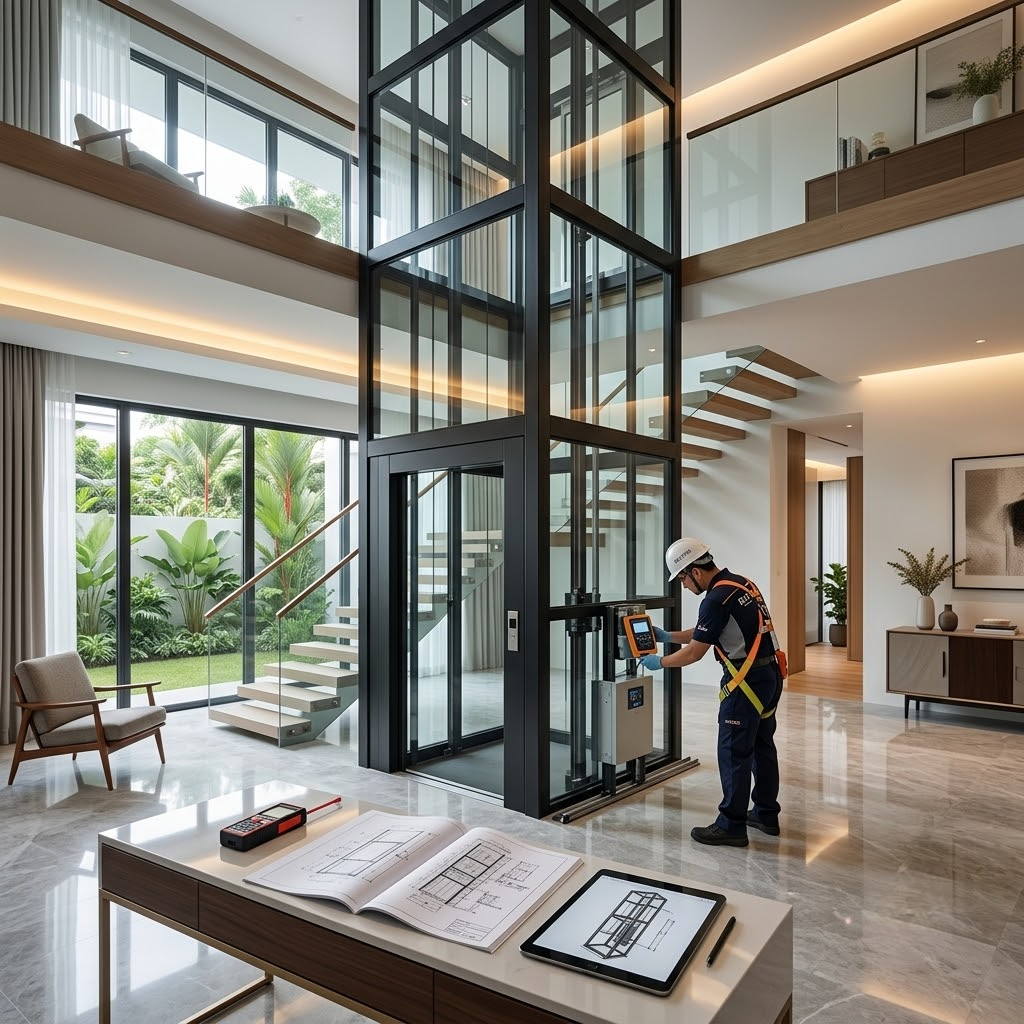
Assessment
Firstly, the property needs to be assessed to establish the suitability of installing a home lift.
Some of the considerations during the assessment might include:
- Floor space available
- Number of floors
- Position of the lift
- Existing building structure
- Movement between floors
- Electrical requirements
- Requirements for shaft or enclosure
- Construction works
This stage will help you to identify the best suited home lift and any preparations that might need to be done.

Choosing the Correct Home Lift
After the assessment of the property, the correct lift system can now be chosen.
There are various types of home lifts that require different installations. The choice will be made according to factors like size of property, number of floors, space available, usage, design preferences among others.
Choosing the lift in advance makes planning easy since the space and other requirements for installation will be known.

Appointment of a Qualified Person (QP)
According to the extent of the home lift installation, there might be a need to appoint a Qualified Person (QP) to deal with the plans and submissions involved.
The QP will evaluate the proposed work and develop or make the plans according to the applicable criteria.
The appointment of the QP from the onset can assist in ensuring that the submissions are made prior to any works.

Amendment and Submission of Building and Structural Plans
In case there are any alterations to be done in the existing building or structure as a result of installing a home lift, the building and structural plans may require some modification and submission to the concerned authorities.
These plans may have to include things like the position of the lift, openings on different floors, structural alterations, etc.
It is important to allow sufficient time in the plan schedule for such activities.
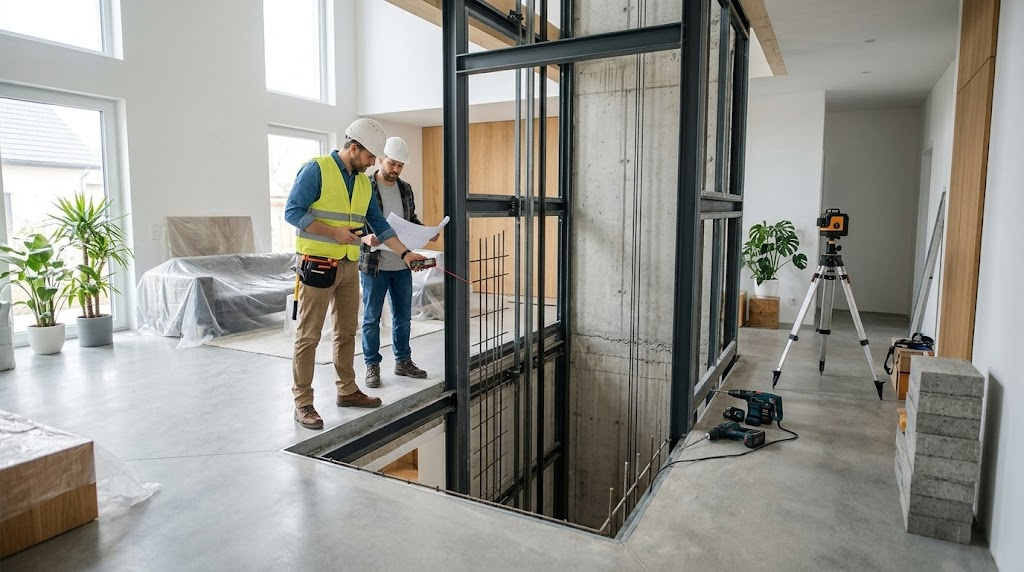
Appointment of a Contractor for Builders' Works
There could be cases where builder’s work is required before the home lift installation can take place.
Builder’s work could comprise of the creation of floor openings, structural alteration, preparation of the lift shaft or enclosure, and other similar alterations to the building.
It will be best to appoint an appropriate contractor to undertake such builder’s work. The time taken for this work can influence the entire home lift installation process.
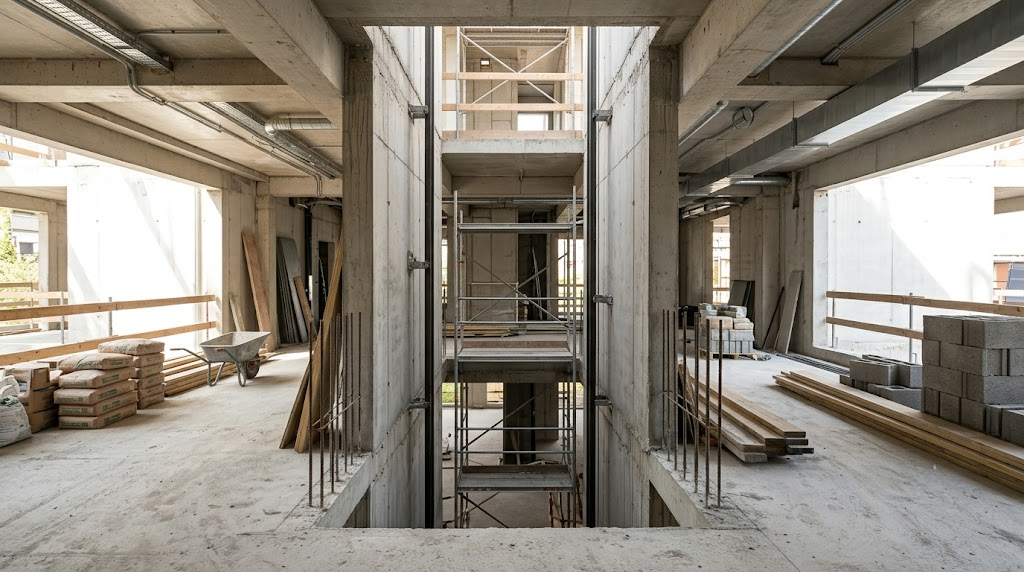
Preparing the Installation Site
Prior to lift installation, preparation of the installation site will be required.
Preparation may include:
- Opening up floor cavities
- Preparation of a lift shaft or enclosure
- Structural preparation
- Electrical preparation
- Floor/wall preparation
- Access preparation for installation equipment
Not all home lift installations will require structural work.
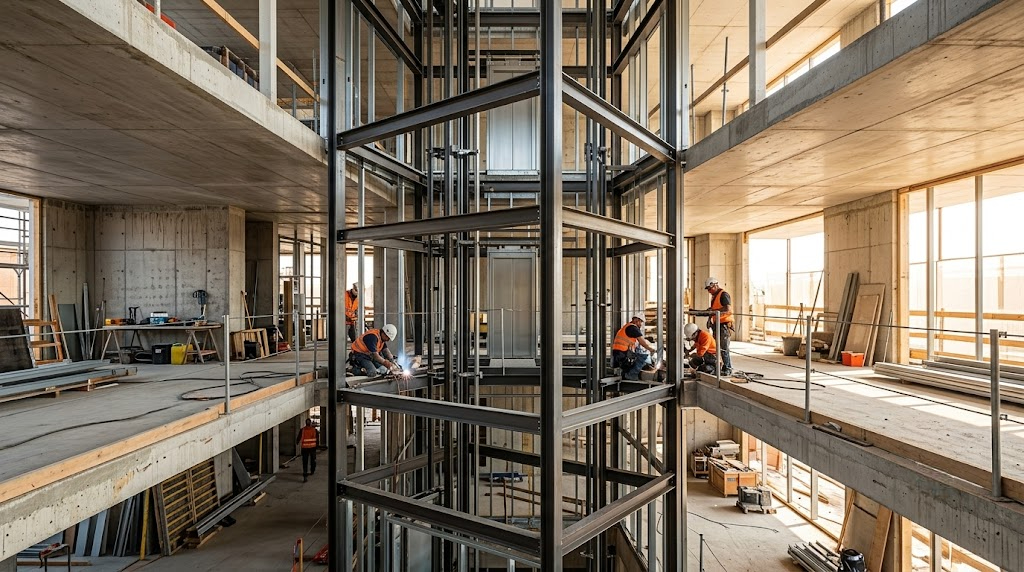
Structural and Construction Work
Structural work will be required for some pre-existing sites.
For instance, modifications to floor cavities, walls, or other building components may be necessary in order to provide space for the lift.
Extensive construction work will result in extended project times.
This is another reason why an assessment by a professional prior to project scheduling is so crucial.
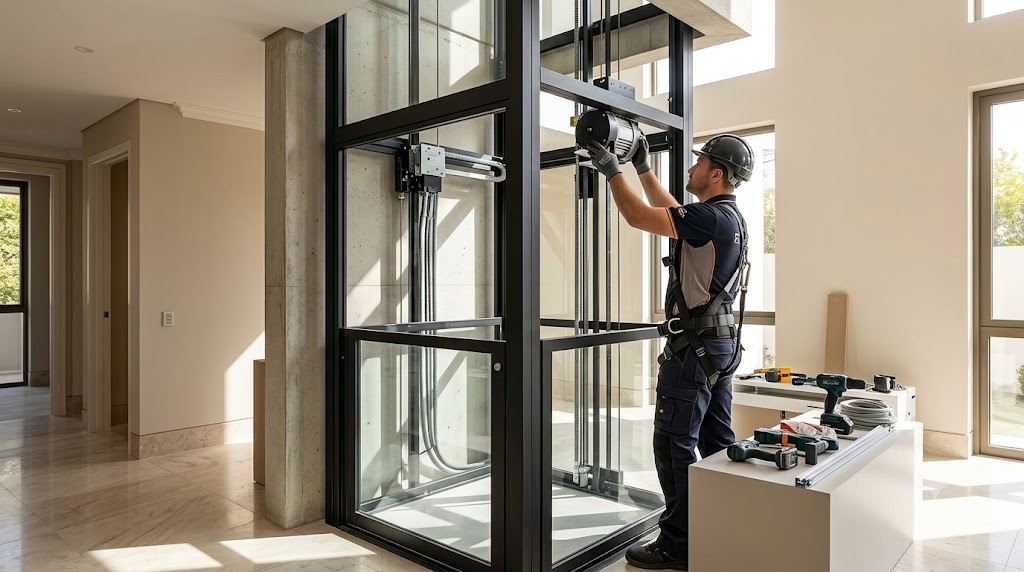
Installation of the Home Lift
After preparation of the site, the lift components will be installed.
This may include installation of the lift structure, doors, control system, driving/lifting system, electrical components, and other equipment.
Installation time will depend on the complexity of the system itself and degree of preparation of the site.

Testing and Commissioning
Once the installation has been completed, the lift will require a test to ensure that the lift system is running properly.
This test may include the following checks:
- Lift movement
- Door movement
- Controls
- Safety features
- Emergency functions
- Electrical systems
- Function at each floor level
In the case of fixed lifts, the requirements of Singapore regarding the inspection and testing should also be fulfilled before operating the lift.
What Factors Can Influence the Duration of
the Installation of a Home Lift?
What Factors Can Influence the Duration of
the Installation of a Home Lift?
Type of Lift
Various types of lifts come with different requirements for installation and construction. Some lifts may need much less structural work than others.
New or Existing House
If you plan to install the lift in a building that is currently under construction, you can do it during the design phase of the project. The installation of a lift in an existing building may take additional planning.
Number of Floors
If you need to install the lift on several floors, there will be additional work for its installation, electricity, and testing.
Space Availability
The space availability can impact not only the choice but also the installation process. If you have limited space, you will need to spend some extra time on finding the most suitable place for your lift.
Structural Alterations
In case of structural alterations, there is going to be extra time necessary for construction before lift installation can take place.
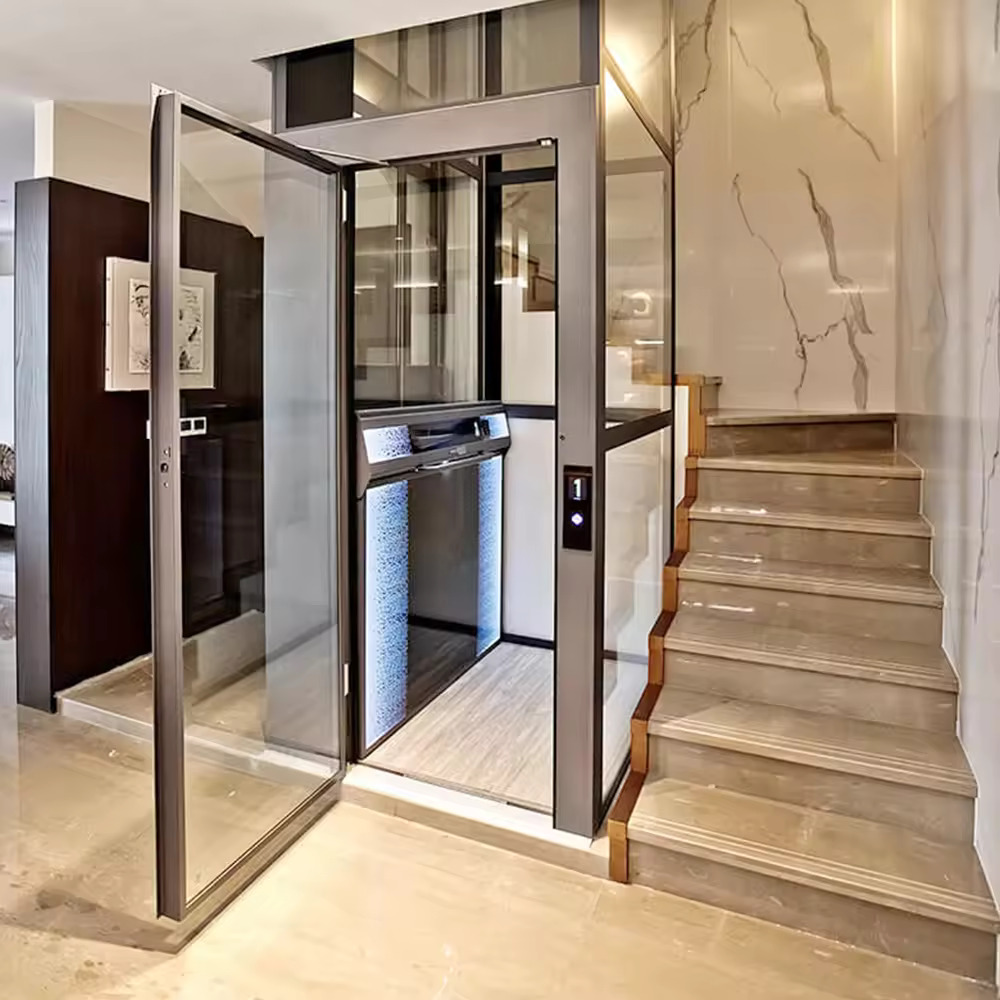
Is It Possible to Install a Home Elevator in an Existing Building?
It is possible to install a home elevator in an existing building, depending on the suitability of the property and the type of elevator chosen.
But the installation of an elevator in an existing building needs proper planning. The installer must consider the structure of the building, the space available, floor plan, power requirements, and the type of elevator selected.
Sometimes, the preparation involved may be limited. In some cases, structural changes will have to be made.
A site survey will help in finding out the requirements before the installation.
Is Construction Involved in Installing a Home Elevator?
Not always.
This will depend on the home and the type of elevator chosen.
In some cases, the elevator chosen may be specially designed for homes with limited installation preparations while others may need more preparations structurally.
Therefore, homeowners need to inquire from the installer about the construction involved in the installation process.
Frequently Asked Questions
What is the time required to install a home lift in Singapore?
Time required will vary based on the lift model, home layout, construction needs, site preparations, and testing/approval. The best approach is to conduct an assessment of the site.
Can a home lift be installed in a pre-existing house?
Yes, in many cases a home lift can be installed in pre-existing homes based on building structure and available space as well as the home lift requirements.
Does a home lift require a shaft?
It depends on the lift model that you choose.
Can structural changes increase the installation time?
Yes, if there is some structural work involved, it may affect the project timeline.
Are there any approvals required for a home lift in Singapore?
Applicable home lift installations need to meet the safety requirements in Singapore. Lift contractor will provide you with all information needed for your installation.
When can I start using the home lift?
You can start using the home lift after the installation requirements are met.