
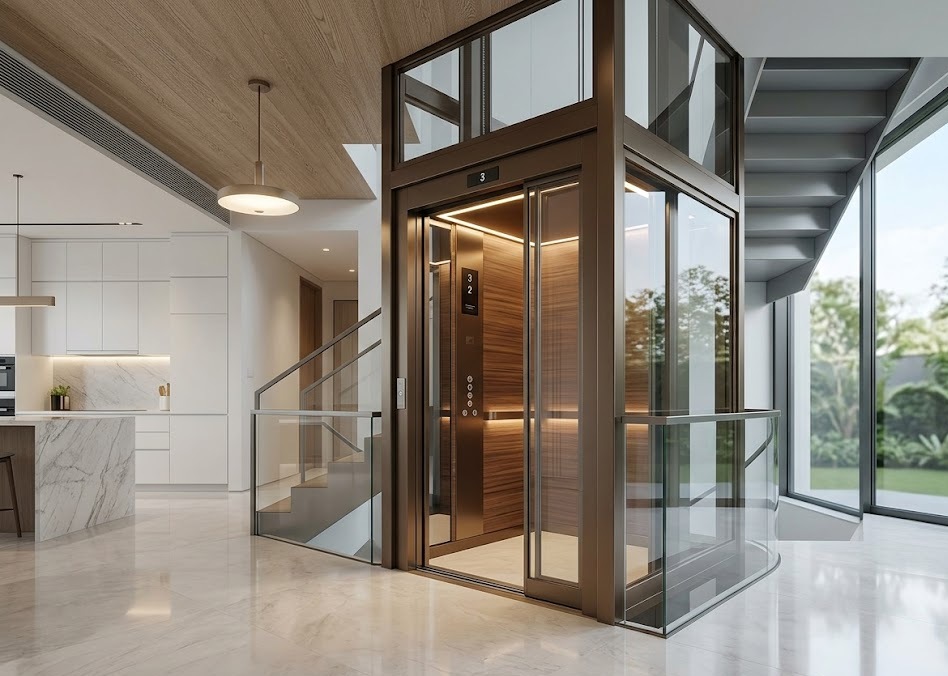
When installing a home lift in Singapore, most people are told there are only two standards to comply with: SS550 or EN81-41, as required by the Building and Construction Authority (BCA).
While both are widely used, they were not originally designed with modern landed homes in mind. As a result, homeowners often face compromises in design, usability, or space.
What many don’t realise is that there is a third option—one that addresses these limitations more effectively.
The Limitations of Conventional Standards
1. SS550 (Conventional Passenger Lifts)
SS550 is designed for full passenger lifts, similar to those found in commercial buildings. While robust, it comes with strict structural requirements:
- Significant headroom
- Deep lift pit
- Larger overall footprint
These requirements can be challenging—or even impossible—to meet in existing landed properties or tight architectural layouts.
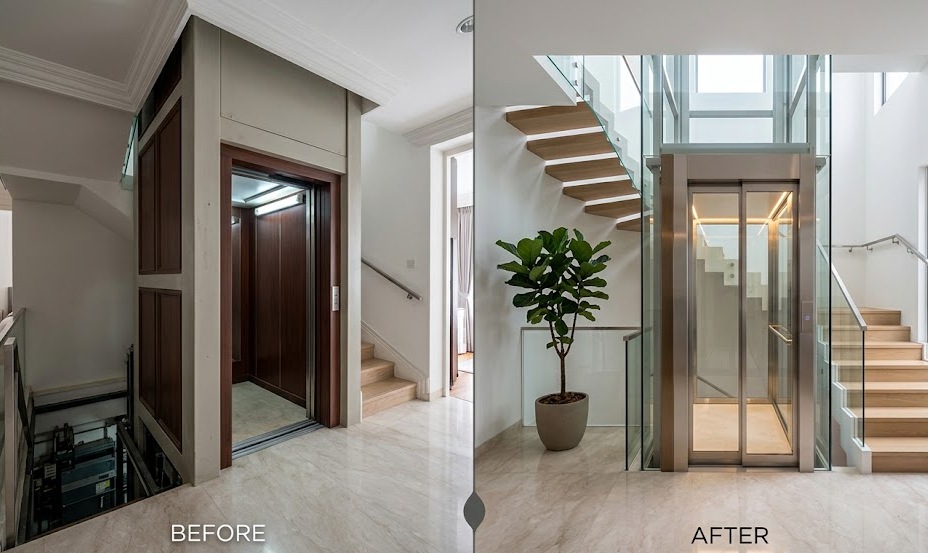
Modern home lift design suitable for residential spaces
2. EN81-41 (Vertical Platform Lifts)
EN81-41 is intended for platform lifts, typically for accessibility use.
However, it comes with trade-offs:
- Often uses hold-to-run operation (continuous pressing required)
- Typically not fully enclosed
- May not support automatic sliding doors
- Less aligned with expectations of a “true lift” experience
The Third Option: A New Code of Practice
In June 2024, BCA introduced a new standard:
Code of Practice for installation, operation, and maintenance of vertical platform lift with enclosed platform and automatic sliding doors
This Code of Practice (COP) was developed in response to increasing demand for lifts that:
- Fit within real-world residential constraints
- Provide full lift functionality and comfort
- Maintain safety compliance
As noted in the COP, these lifts do not fully comply with SS550 or EN81-41 due to design differences such as reduced pit depth and overhead clearance, but the COP establishes specific safety requirements to address these gaps.
Why This Matters for Homeowners
This newer standard effectively bridges the gap between practicality and performance.
Key Advantages
- Smaller footprint – Easier to integrate into tight spaces or retrofits
- Low headroom requirement – Suitable for houses with height limitations
- Shallow or minimal pit depth – Reduces structural modification costs
- Fully enclosed cabin – Safer and more comfortable than open platforms
- Automatic sliding doors – True lift-like experience with one-touch operation
What Makes It Different?
Unlike traditional platform lifts, these systems combine:
- The comfort and usability of passenger lifts
- The space efficiency of platform lifts
The COP also introduces detailed safety requirements covering:
- Door systems and obstruction detection
- Emergency operations and rescue provisions
- Ventilation, lighting, and electrical protection
- Protection against unintended movement and overspeed
All VPL (Enclosed) systems must still meet EN81-41 baseline requirements, with additional safeguards layered on top.
An Industry “Best Kept Secret”
Despite its advantages, this approach is still not widely discussed.
Many homeowners are only presented with SS550 or EN81-41 options, without being informed that a more suitable hybrid solution exists.
In reality, this COP-based system is often the most balanced choice for:
- Landed property owners
- Renovation projects
- Space-constrained homes
- Homeowners seeking both functionality and aesthetics
Conclusion
Choosing the right home lift isn’t just about compliance—it’s about finding a solution that fits your home and lifestyle.
While SS550 and EN81-41 remain valid standards, the newer Code of Practice offers a compelling alternative that overcomes many of their limitations.
For homeowners planning a lift installation, understanding all available options can make a significant difference in both design flexibility and long-term satisfaction.